“Wait… do I say this one or that one?”
If that question sounds familiar, congratulations — you’ve already started thinking like an English speaker!
These tiny words — this, that, these, and those — sneak into almost every conversation. We use them when showing something, pointing at something, or just trying to sound clear and natural.
But here’s the secret: they’re not difficult at all. You already use them in your language every day — you just need to know how they work in English.
So, take a quick look around you. What’s near you? What’s far away? By the end of this article, you’ll be able to describe them all — easily and confidently.
Demonstratives are words we use to point to or show people and things.
They tell us which one we’re talking about — the one close to us or the one far away.
There are only four:
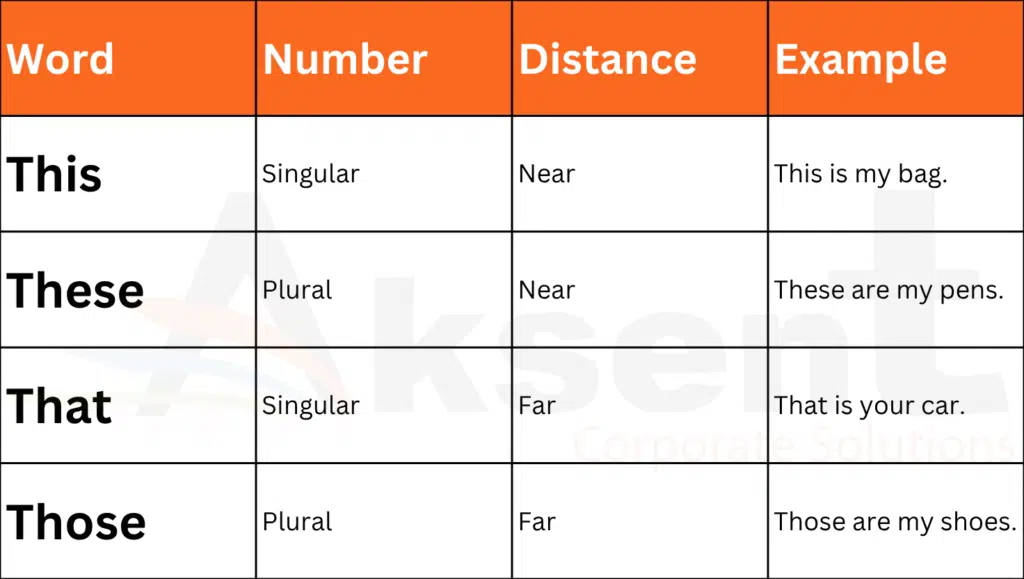
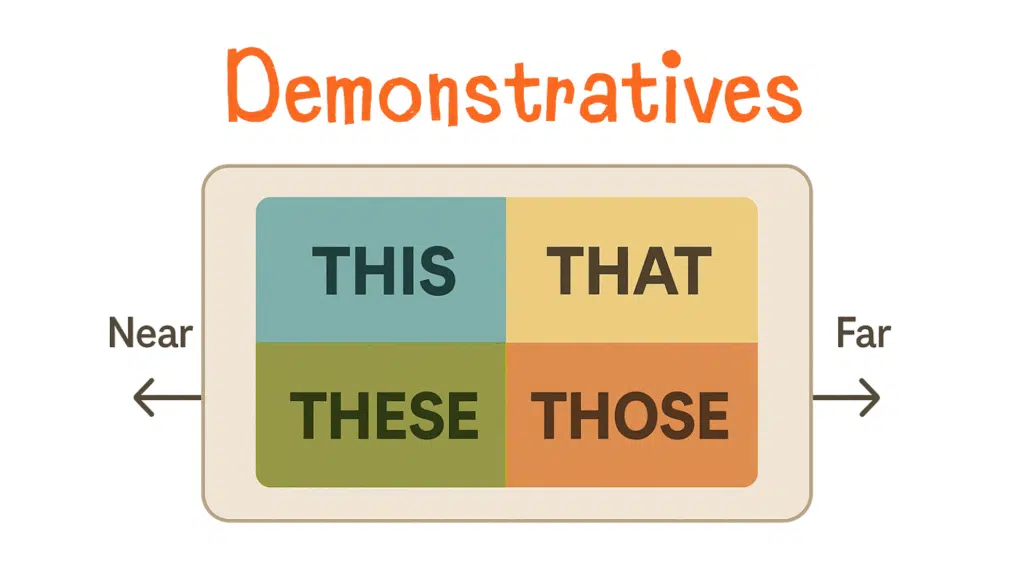
👉 This, That, These, and Those
Even though they’re small, they’re powerful. They help make your sentences clear and specific.
Now let’s look at what each word means — one by one.
Meaning:
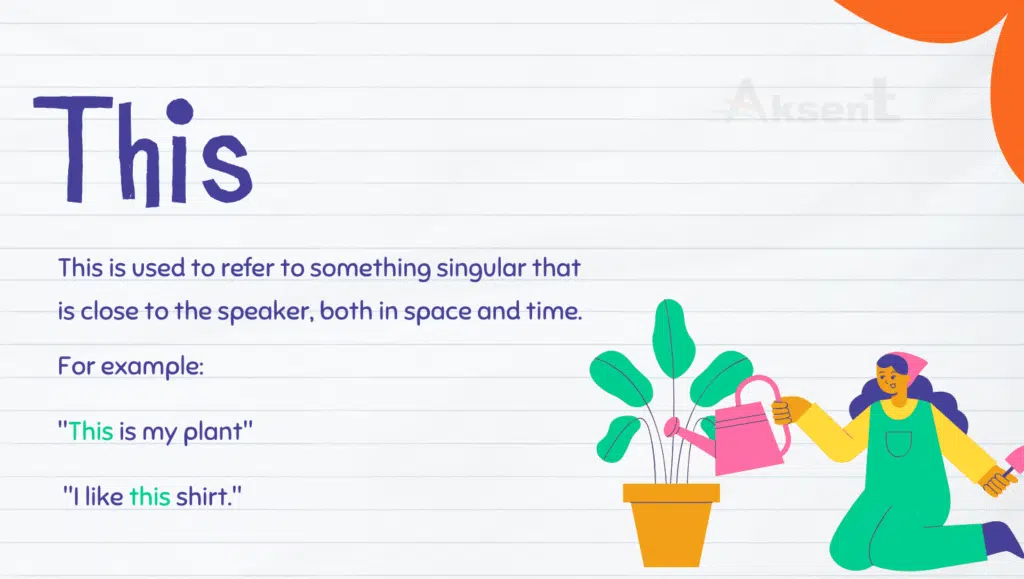
We use this when we talk about one thing that is close to us — something we can touch or hold.
Examples:
This is my phone.
This is a cup of coffee.
This is my friend.
Tip:
👉 Use this for singular (one) things near you.
If it’s right in your hand, this is the right choice.
Meaning:
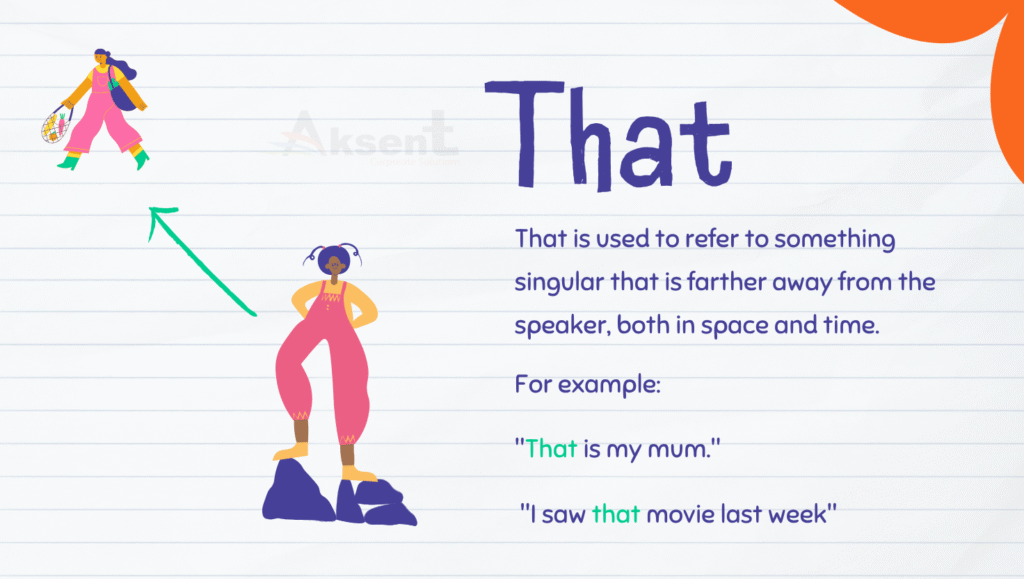
We use that when we talk about one thing that is far from us — something we can point to, but not touch.
Examples:
That is my car over there.
That is a tall building.
That is my school.
Tip:
👉 Use that for singular (one) things far away.
If you have to point at it, it’s that.
Meaning:
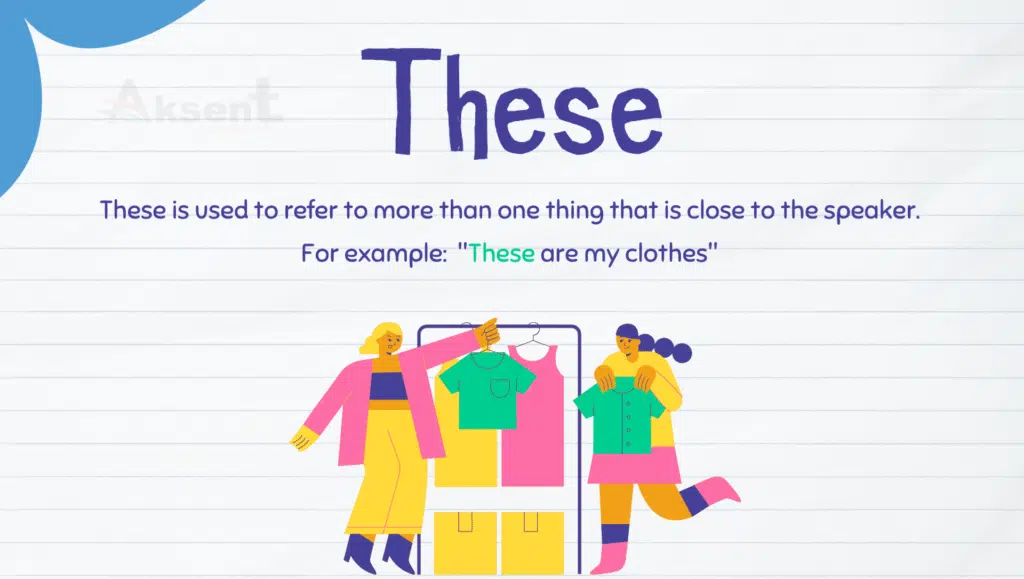
We use these when we talk about more than one thing that is close to us — things we can touch or show nearby.
Examples:
These are my books.
These are my keys.
These are my shoes.
Tip:
👉 Use these for plural (many) things near you.
If they’re right beside you, say these.
Meaning:
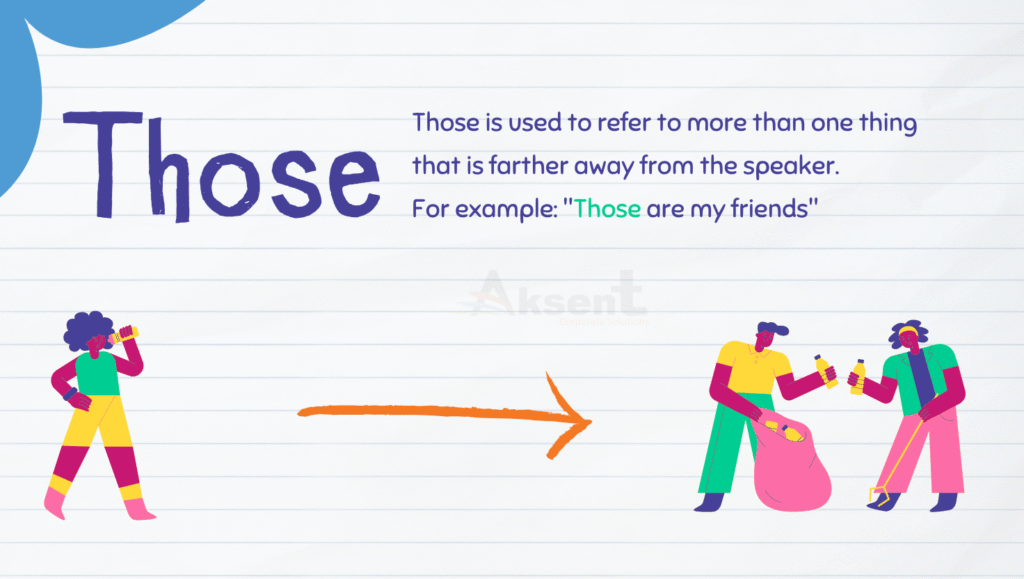
We use those when we talk about more than one thing that is far away — things we can only point to.
Examples:
Those are my friends over there.
Those are mango trees.
Those are beautiful houses.
Tip:
👉 Use those for plural (many) things far away.
If you can only see them at a distance, it’s those.
💡 Memory Trick:
If you can touch it, use this or these.
If you can only point to it, use that or those.
Let’s practice using these words naturally:
Look around your room.
Say five sentences with this / these.
Say five sentences with that / those.
Example:This is my notebook.
💡 Practice this daily for a week — it’ll soon feel effortless.
You’ve just learned one of the easiest yet most useful grammar topics — Demonstratives!
They help make your English sound clear, confident, and natural.
Once you start noticing them in daily life, you’ll see how often you use them — in every conversation.
So, look around and start describing what you see:
You know how to use this, that, these, and those — now let’s use them like a fluent speaker. Join Aksent’s English for Beginners Course — your first step toward confident, natural English communication.
Adverbs make your English sound more natural and expressive! This easy-to-follow guide helps English learners understand what adverbs are, how to use them correctly, and why they matter in everyday conversations.
Confused between bigger and more big, or the best and the most good? This practical guide explains the rules, shows the exceptions, and gives you a ready table and quick practice so you can use the right form every time.
Confused between a, an, and the? You're not alone! These small but mighty words can completely change the meaning of your sentence. In this blog, we break down articles with simple rules, fun examples, and real-life tips to help you sound clear and confident. Let’s master the art of using…
Asking 'Are you hungry?' or 'What time is it?' seems simple, right? But how do we get there? This post demystifies the verb 'be' in the present simple, showing you how to form questions and descriptions with ease. Perfect for beginners looking to build a strong English foundation.